New Wave
November 17, 2024Navigating a Digital Forest, Crumbs and Consent
April 10, 2025Introspective Writing
Cathryn Leow Jia Xin
Ever heard of twin cinema? Pioneered in Singapore, by Yeow Kai Chai, it’s a unique form of poetry that comes in two columns and can be read in three ways — column by column and across the rows. Later, the form even expanded into triple and quad cinema. Unfortunately, the earliest known triple cinema obtained only a scarce seventy eight likes and has since been deleted. The earliest quad cinema I could find did barely better at a hundred likes, though at least that one hasn’t been removed.
It says something, unfortunately, that those are the only metrics I can use to measure the success of these innovative, complex testaments of literary skill.
Singapore is such a small, young country; there is almost nothing we can claim as completely ours, let alone say we invented, yet even in its base form of twin cinema, this style of poetry we have invented has little reach. Nevermind being known globally, or in Southeast Asia, even most Singaporeans have never heard of it, and forget about claiming it as a part of our culture and as the show of our ingenuity that it is — the ‘Singapore Son’, though lauded at its conception as poignant and moving, has just as quickly been forgotten.
Why is this?

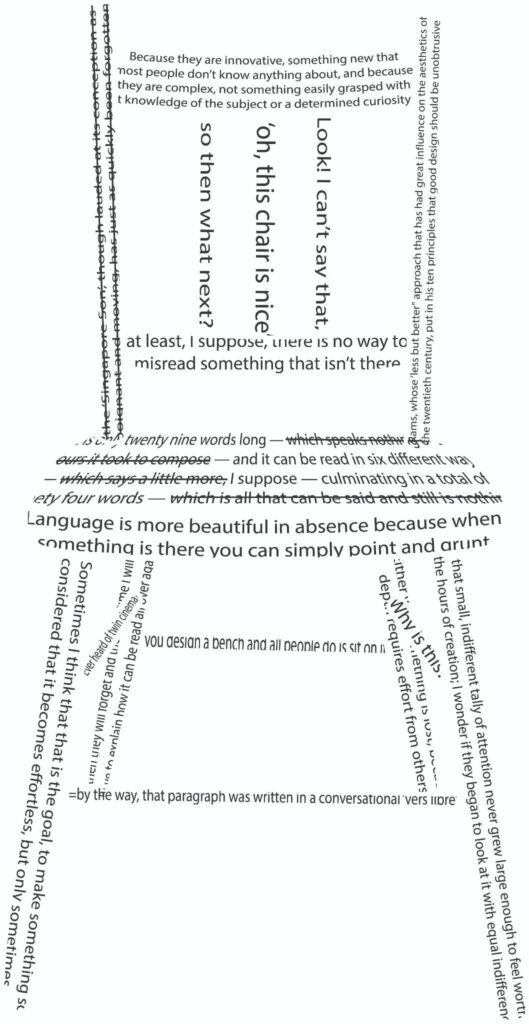
Take this poem I have written, for instance — it is only twenty nine words long — which speaks nothing of the hours it took to compose — and it can be read in six different ways — which says a little more, I suppose — culminating in a total of ninety four words — which is all that can be said and still is nothing.
I expect that, of those ninety four, most people would read only the twenty nine, or, even better, one, before turning away in disinterest, because twin and triple cinema are innovative, complex testaments of literary skill. Because they are innovative, something new most people don’t know about, and because they are complex, not easily grasped without knowledge of the subject or a determined curiosity.
Look I want to say,
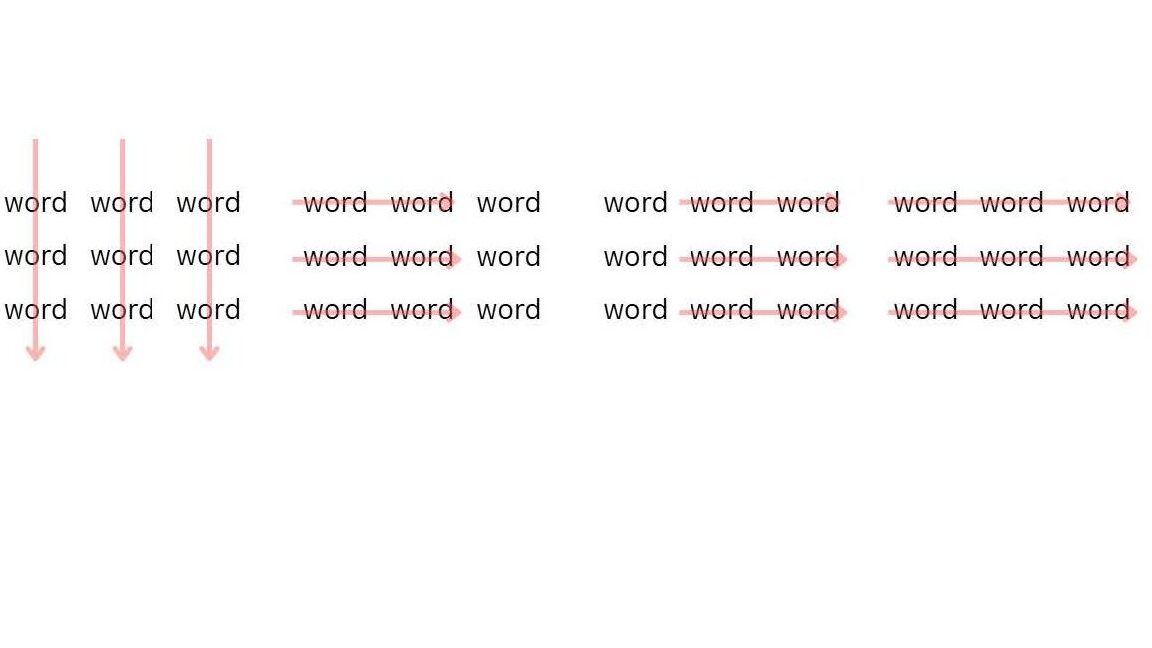
See here all of the ways this art I have created is art! Interpret it through my eyes! I’ve even put it into a nice, neat little visual for you! Look! I can’t say that, I can’t force them to learn how to interpret this form of poetry, because even if I do that impression is momentary. They might say it’s cool, maybe they will even actually be impressed, but then they will forget and soon I will have to explain it all over again. Even putting this little visual here disrupts and distracts from the art itself! This little visual can’t communicate half the depth of twin cinema! This visual is just my interpretation, my view, and showing all of the possibilities for interpretation only serves, in the end, to restrict their interpretation, except most audiences would never attempt interpretation to begin with! Either way, something is lost, because depth requires effort from others.
By the way, that paragraph was written in a conversational ‘vers libre’, a style of poetry that doesn’t adhere to fixed rhyme schemes, allowing for natural speech patterns and experimental formatting. Did you notice? Could you repeat the definition back to me?
That’s the way things go though — it’s the same in design — you design a chair and all people do is sit on it. The layman will never care to understand the thought or time behind it. The curvature of it for a natural, flowing form that guides the eyes and enhances the space. The joinery choices between mortise and tenon vs dowel vs screws. Rams, whose ‘less but better” approach has had great influence on the aesthetics of the twentieth century, put in his ten principles that good design should be unobtrusive — but then it follows that only bad design is obtrusive. According to this philosophy, the highest level of craft removes friction so efficiently that it erases its own presence from the senses. Only bad design should grind against the mind like nails on chalkboard and prompt more than a passing ‘oh, this chair is nice’. Language is more beautiful in absence because when something is there you can simply point and grunt. Does true elegance thus require that it is not seen at all? Yet, if people do not see, does that elegance survive?
I still found that first, forgotten, deleted triple cinema, or, what was left of it. The shape of it, not the poem itself but the knowledge that it once existed, and that it no longer does, that I cannot read it now, in any of its once intended ways — at least there is no way to misread something that isn’t there anymore. Perhaps that is the better, dignified end? Removed by its own creator, but I wonder if the creator deleted it because the numbers beneath, that small, indifferent tally of attention, never grew large enough to feel worth the hours of creation; I wonder if they began to
look at it with equal indifference. Perhaps its end was mundane, perhaps it was discarded casually, the way an old, worn chair is tossed out when tastes and priorities shift. And if no one sees, and no one notices, and no one stops to ask or even uses it anymore — if even the creator who put in such care steps away, does that care persist?
A chair, however, is never only a chair. It becomes a step stool, a place to stack books, a temporary table. Its meaning shifts with the person who uses it. The designer proposes structure, but the user completes it. The final definition belongs not to the maker alone, but to everyone who interacts with it. Similarly, twin cinema does not insist on singular meaning. It offers possibilities — directions the reader can choose to follow. Each reading becomes an act of selection and attention. Meaning, then, is not delivered intact from writer to reader. It is assembled. A curve may guide the hand, but it does not demand a single response. Instead, it opens space.
Rams said that good design must be unobtrusive — it does not force itself into awareness. It leaves room for interpretation, allowing the user to discover meaning gradually through interaction. Subtlety becomes not invisibility, but the leaving enough silence for imagination to speak, and my role as a designer, is not only to create objects, but to construct frameworks for imagination.